

A Sweet Escape: Ice Cream in Italy
The Irresistible World of Ice Cream in Italy
Ice cream in Italy is more than just dessert—it’s a ritual, a cultural symbol, and in many ways, a story of everyday life, and from the north to the south, gelato isn’t just a seasonal indulgence. It’s part of the rhythm of the day, woven into habits that stretch back centuries.
Walking through Rome, Florence, or a small coastal town, you’ll quickly discover that gelato is everywhere. Tucked in side streets or displayed proudly in piazzas, each historic gelateria that witnessed decades of life carries its own identity, and these aren’t just shops; they are spaces where history, espresso and conversation blend, where grandparents once brought their grandchildren, and where today tourists line up next to locals sharing the same craving.

The Charm of Historic Gelaterie
There is something magical about stepping inside a historic ice cream bar. The marble counters seem to whisper old stories, the antique photographs reveal decades of smiling faces, and the recipes remain closely guarded secrets passed through generations.
Some of these gelaterie have doubled as historic cafés and historic bistros, places where a quick scoop could be followed by a coffee or even a light meal. They often feel like cultural hubs, where people come not just to eat but to talk, to slow down, and to be part of a space that holds the memory of the neighborhood.
This blend of unique flavors and artisanal tradition makes every visit special. It’s not just about satisfying a sweet tooth—it’s about tasting history.
Exploring Flavors Beyond Imagination
One of the biggest joys of Italian ice cream is the sheer variety, unlike the handful of options you might find at a chain shop, here gelato has hundreds of flavors. Each one tells a story, pistachio often comes from Sicily, smooth and nutty, while hazelnut connects to Piedmont, famous for its chocolate-hazelnut creations, and lemon feels like sunshine from the Amalfi Coast.
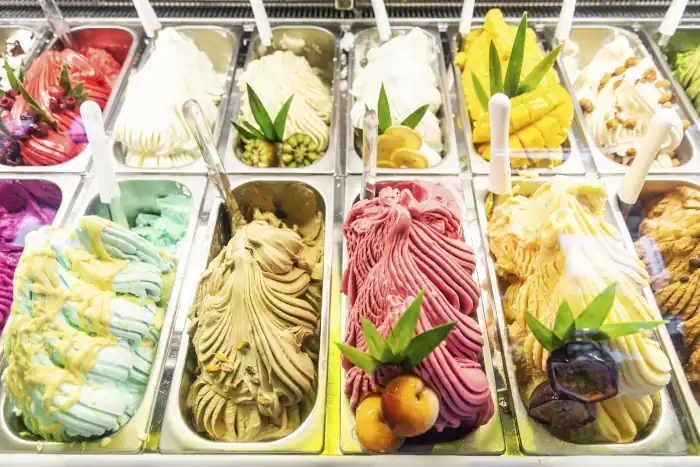
But Italian gelato doesn’t stop at tradition. Creativity plays a big role too. You’ll find daring combinations like basil and lime, ricotta and figs, or even prosecco sorbet. The result is not only the prettiest ice cream in the world—presented like a painter’s palette—but also the most adventurous.
Ice Cream Cakes and Family Gatherings
Beyond scoops and cones, Italy has a long tradition of ice cream cakes. Unlike the frozen cakes you see in big-box stores, Italian ones are freshly made by local gelaterie for birthdays, anniversaries, and Sunday lunches.
They often combine multiple flavors, from fruit sorbets layered with chocolate gelato to creamy hazelnut paired with strawberry, but more than dessert, they’re the centerpiece of family life, proof that food in Italy is always about bringing people together. A family gathering without an ice cream cake often feels incomplete.
- Hoosier Hill Farm Heavy Cream Powder, 1LB (Pack of 1)
- Avacream Ice Cream Stabilizer Mix (8 oz)
- Ice Cream Starter Mix,Strawberry,Milk & Chocolate Flavor Low Sugar Ice Cream…
- Mellow Pistachio Spread – 35% Pistachio Paste – 11 lb (5 kg) Bulk Tub – Rich,…
- Frostline Vanilla Soft Serve Ice Cream Mix, Lactose & Gluten Free – Just Add…
Gelato as Lifestyle
In Italy, enjoying ice cream isn’t limited to summer afternoons, but it’s part of a daily rhythm. People enjoy it after dinner, during an evening walk, or even as a pause between work and home, or sitting at a café table, savoring gelato while chatting with friends, becomes a simple yet powerful pleasure.
And the spaces that host it matter. Many gelaterie are tied to lounge bars or music bars, blending gelato and entertainment with cocktails, live music, and night-time energy. This ability to adapt tradition to modern lifestyles makes gelato not just timeless but also constantly renewed.
Layers of Tradition, Design, and Lifestyle
Italian ice cream culture also reflects the nation’s love for design and beauty. Gelato isn’t hidden in tubs, but it’s displayed like art, with swirls, fruit decorations, and colors that make the counter itself a visual feast, and even the interiors of historic cafés and historic bistros reflect this attention to style, with carefully chosen lighting, décor, and furniture that elevate the simple act of eating dessert into an experience.
This is why so many people describe Italian gelato as the prettiest ice cream in the world. It’s not only about taste but also about how it fits into the broader Italian idea that beauty belongs in everyday life.
Why Gelato Feels Different
The real secret to why Italian ice cream tastes different lies in how it’s made, because gelato uses less fat than American ice cream, is churned more slowly, and is served slightly warmer. This gives it a denser texture and a flavor that feels more intense, and add to that the use of fresh, often local ingredients, and you begin to understand why so many travelers insist nothing compares to gelato in Italy.
It’s not just dessert. It’s a unique artisanal tradition that reflects respect for ingredients, history, and community.

Comparing Ice Cream in Italy vs. the United States
So, what’s the difference between ice cream in Italy and in the US?
In the United States, ice cream often means big tubs from the supermarket, national chains, or frozen treats at family barbecues, and it’s about fun, nostalgia, and convenience. Ice cream cakes, family gathering moments exist too, but they’re often tied to commercial brands rather than local artisanal creations.
In Italy, ice cream is about artistry, ritual, and place. People don’t usually eat it in front of the TV—they go out to the piazza, stroll to their favorite historic gelateria, and savor it while talking with friends or family, and gelato is everywhere, but it always feels tied to its location.
If we simplify:
In the US, ice cream is comfort food.
In Italy, ice cream is culture.
And that’s exactly why so many visitors say Italian gelato feels like tasting the soul of the country.
Bring Italy Home
Even if you can’t hop on a plane tomorrow, you can still bring some Italian sweetness into your life. Explore artisanal gelato brands online, or try your hand at making your own, and when you do, remember: you’re not just eating dessert—you’re continuing a tradition that Italians have cherished for centuries.
Product Tips
Baking Pastry 24Piece Cake Decorating Set Non-Slip Turntable
Original price was: $25.77.$12.63Current price is: $12.63.Bag Faux Suede Slouchy Shoulder Bag Women Solid Handbag
Original price was: $32.81.$14.43Current price is: $14.43.







Share: